Five years ago it would have been hard to fathom Microsoft, fresh off a release of Windows 7, owning one of the biggest phone manufacturers in the world. But today, in 2014, we live in a world where Nokia’s phone business is controlled by Microsoft, with every smartphone off the production line running Windows Phone. Times well and truly change quickly.
The majority of Nokia/Microsoft’s smartphone business focuses on mid-range and entry-level products, with devices like the Lumia 520 proving especially popular. However, every year the company releases a few flagships to compete with the likes of the iPhones, Galaxys and Ones, usually in several form factors to attract a range of buyers. Last year, for example, we saw the release of the Lumia 925, the large-screened Lumia 1520, and the 41-megapixel Lumia 1020.
Today I’m reviewing the Nokia Lumia 930, which is the company’s standard flagship and successor to the Lumia 925. You might notice that this handset looks very similar to the Lumia Icon the company released earlier this year exclusively on Verizon, and that’s because it's essentially the international version of the Icon, packing Windows Phone 8.1 out of the box.
Most importantly, the smartphone is well-built, using a combination of tough Gorilla Glass on the front, aluminium around the edges, and soft-touch plastic on the back. This does mean that the 930 is a tad weighty, tipping the scales at 167 grams, but it doesn’t feel as brick-like as the notorious Lumia 920. All the materials used are high quality, and are joined together well, giving the handset a tough, cohesive and pleasing feel.
While the Lumia 930 is well made, it’s clear that Nokia hasn’t put much effort into producing the slimmest smartphone going around. The aluminium edges are squared off such that there’s no hiding the phone’s thickness, with the back curving slightly to fit in more components. Nokia claims the 930 has a “volume thickness” of 9.8mm, and by my measurements the device balloons out to 10.5mm at its thickest point.
Usually vendors opt for thicker smartphones so they can pack in larger batteries, but the Lumia 930 includes just a 9.2 Wh (2,420 mAh) non-removable cell, smaller than most flagship smartphone batteries. I’ll talk more about battery life later in this review, although I do have to wonder what causes the 930 to be this thick when the battery isn’t an obvious culprit.
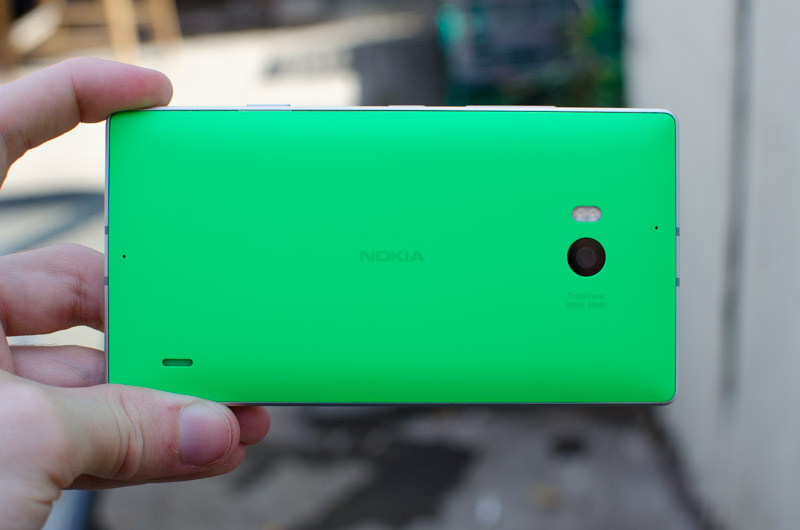
The choice to use three separate materials for the Lumia 930’s design can give the smartphone and interesting three-tone color profile. The green model I received has a vibrant, bright green back (which turned a fair share of heads), plus a sliver aluminium edge, and a black front panel. I don’t think the three colors gel together particularly well, but this isn’t an issue on the white model or the all-back model. Orange is also an option if you want something out of the ordinary.
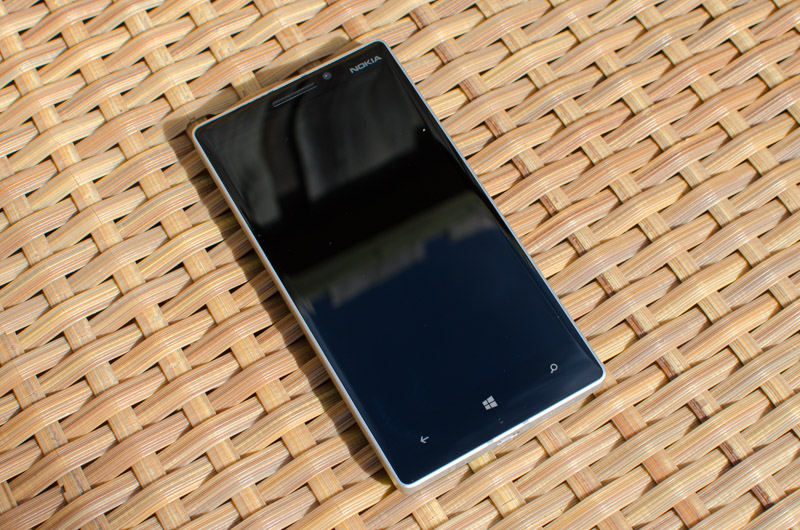
The front panel is mostly display, like all modern smartphones, covering 71% of the area available to it. Above the display you’ll find a slim speaker grill and the front facing camera, and at the bottom are the capacitive navigation buttons. The Gorilla Glass 3 protecting the panel is convexly curved so that your fingers slide nicely off the edges during operation, giving the display an edgeless feel that I really appreciate.
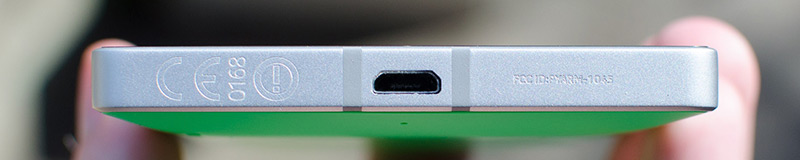
Around the edges you’ll find the nano-SIM tray integrated into the top panel, along with the 3.5mm audio jack; on the right edge is a quartet of buttons including the dedicated camera button; and on the bottom there’s the micro-USB port. Also on the bottom edge are regulatory engravings, which are unfortunately mandatory and ruin the sleekness of the aluminium build.
If you look closely you should also be able to spot several plastic strips on the top and bottom that break up the aluminium edge into segments. While it’d be great to see the edge constructed from one piece, the plastic is necessary to ensure the wireless radios function correctly.
There’s no stereo front facing speakers like HTC and Sony provide on their flagships, with the Lumia 930’s single loudspeaker on the back. It isn’t great quality like most small phone speakers, but it does the job for notification tones and the occasional bit of video playback. It’s also in a clever position on the back that makes it hard to block with your fingers while playing games, which can often be an annoying aspect of the rear-facing speaker.
While I really like the design of the Lumia 930 from a visual standpoint, there’s one drawback to the rectangular slab body Nokia has used: it’s not very ergonomic. The squared-off edges, particularly the bottom-right corner that is closest to the palm of my hand during usage, aren’t moulded with comfort in mind. Rounding these edges more would improve the ergonomics of the handset, although it would come at the cost of design, always an unfortunate trade-off.
As far as minor complaints go, the typical Nokia choice of placing the power button below the volume rocker makes it slightly too low down on the right-hand edge for perfect use. The positioning of the capacitive buttons can make them hard to hit as well, especially the back button, until you get familiar with how to hold the Lumia 930 in your hands.
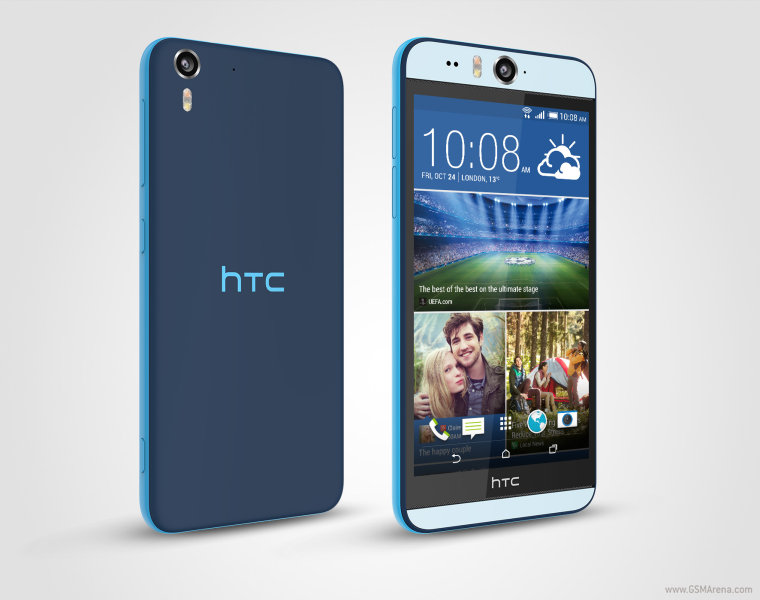
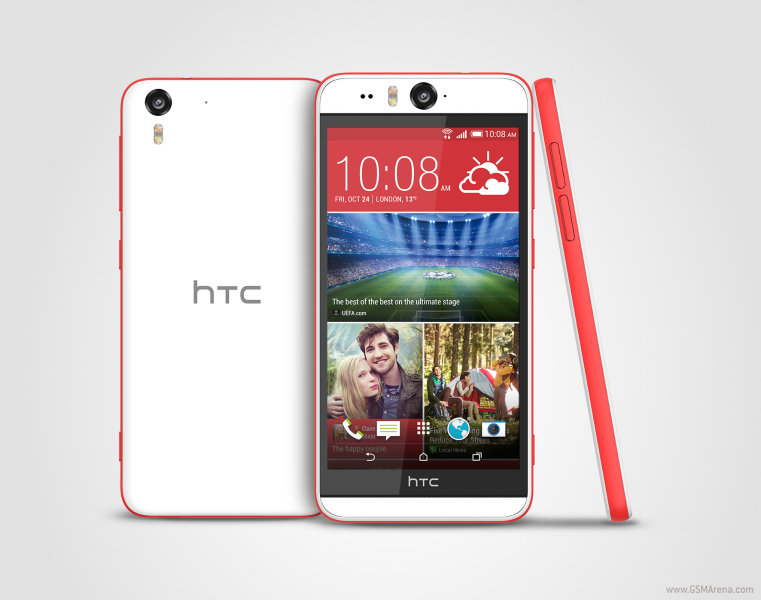
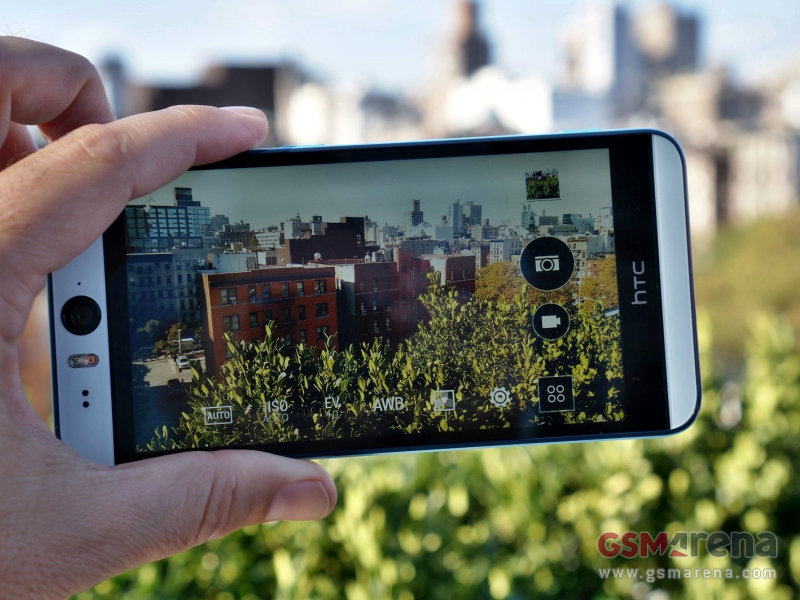
Portrait photography used to be something people dress up for, now teens snap a few "selfies" before breakfast. HTC goes all-in on the selfie craze with the new HTC Desire Eye where front and back cameras pack equally impressive 13MP sensors. They also have a dual-LED flash each, so now photos of you get the same treatment as photos of other people.
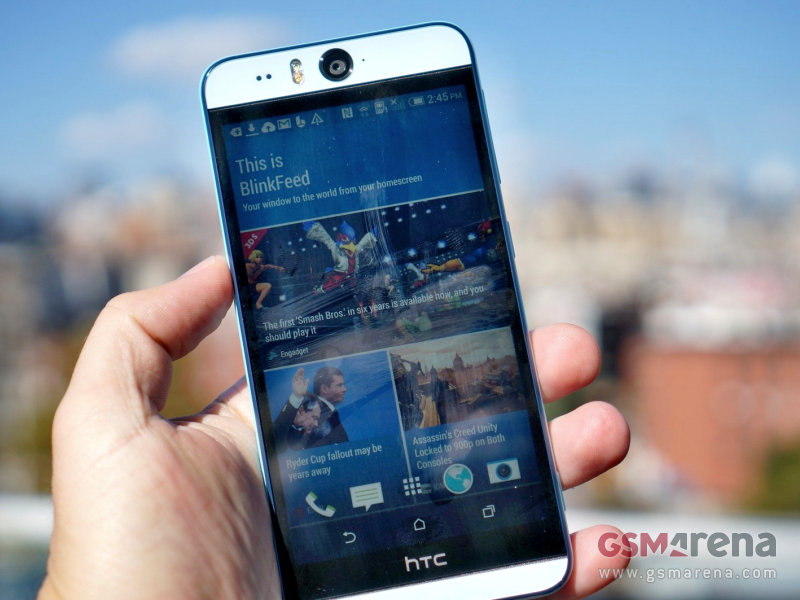
HTC is continuing to experiment with camera setups - the Duo Camera of the HTC One (M8) was unique and the Desire Eye setup is even more remarkable. The front-facing camera appears massive, a cyclopic eye right above the screen. It's a 13MP unit with its own pair of two-color LEDs, making it probably the most impressive selfie camera we've seen.
HTC says it's more than just selfies - plenty of 18-26-year-olds spend a lot of time video chatting, not counting professionals who can use the potent front cam for video conferencing. There's a good deal of proprietary software to back up that claim and the same imagination that spawned Zoe is here with a new twist on dual-camera photos (dual as in front and rear, not two at the back).
Front camera: 13MP auto-focus camera, dual-LED flash; f/2.2 aperture
Video camera: Full HD (1080p) video recording at 30fps with both cameras
Connectivity: dual-band Wi-Fi a/b/g/n/ac, Wi-Fi hotspot, DLNA, Bluetooth 4.0 with aptX, NFC, microUSB port, GPS receiver with A-GPS and GLONASS, 3.5mm audio jack
Misc: BoomSound stereo speakers on the front; IPX7 water resistance (up to 1m for 30 min); three microphones
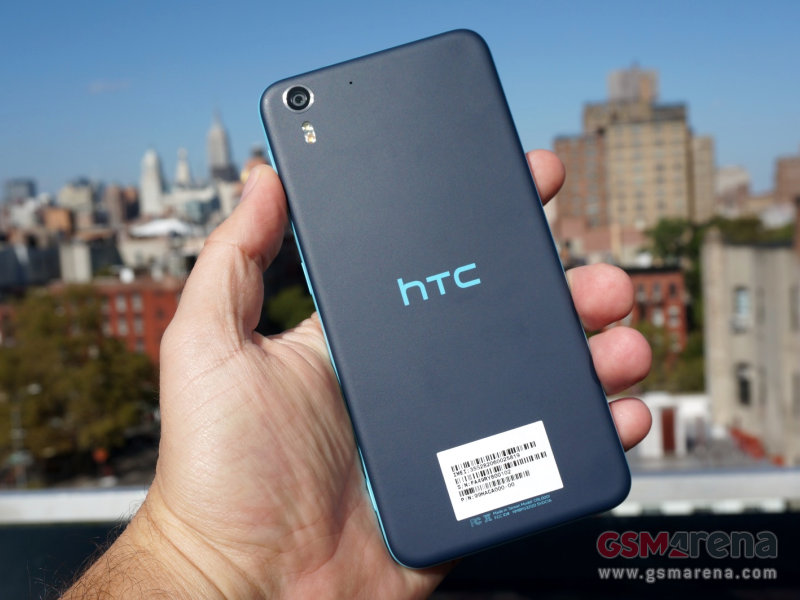
Beyond that the HTC Desire Eye is the new flagship of the Desire family line. With its plastic exterior it can't rub shoulders with the One elite, but the Eye has a bigger screen (5.2") than the One (M8) and the same Snapdragon 801 chipset.
It's water resistant too - IPX7 for submersion up to 1 meter for half an hour - and HTC pulled it off without any flaps. The Desire Eye keeps the BoomSound stereo speakers, the LTE connectivity, the microSD card slot, the Sense-enhanced KitKat, basically all the best features of the latest One flagship aside from the metal unibody.
We've not heard anything on pricing yet but HTC is well aware of how market segments and pricing work and we'll be very surprised if a Desire gets priced higher than the One. Time to market was another talking point so the launch date should be close.
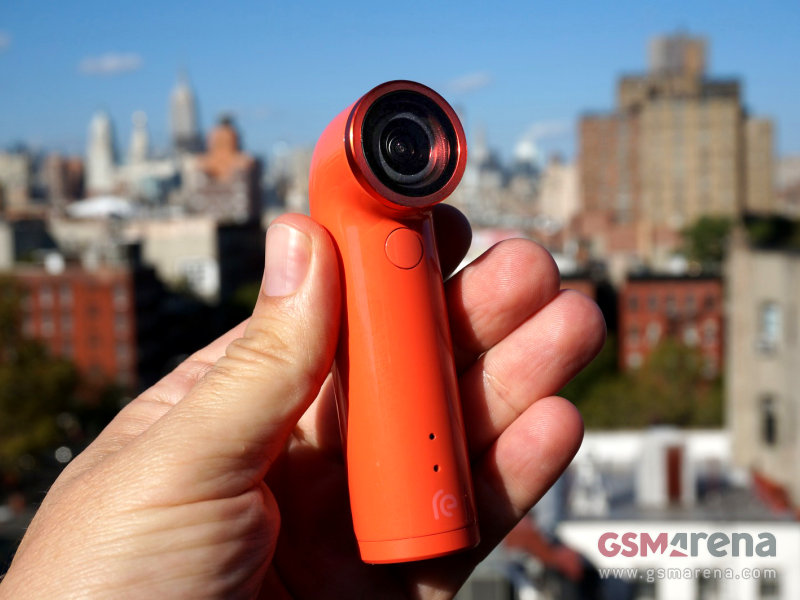
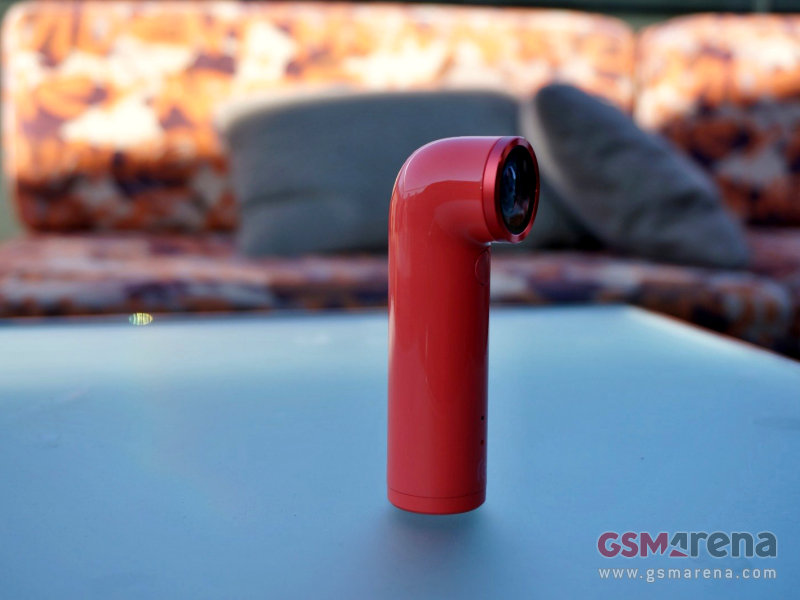
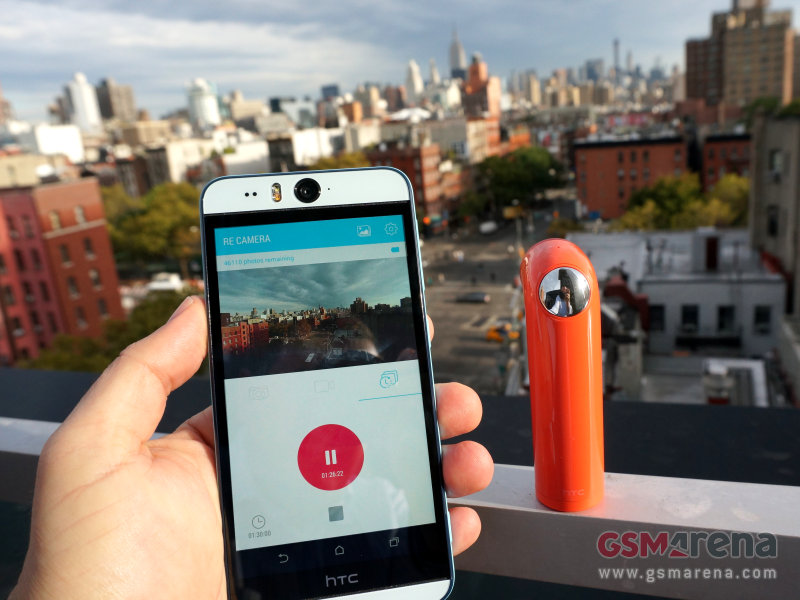
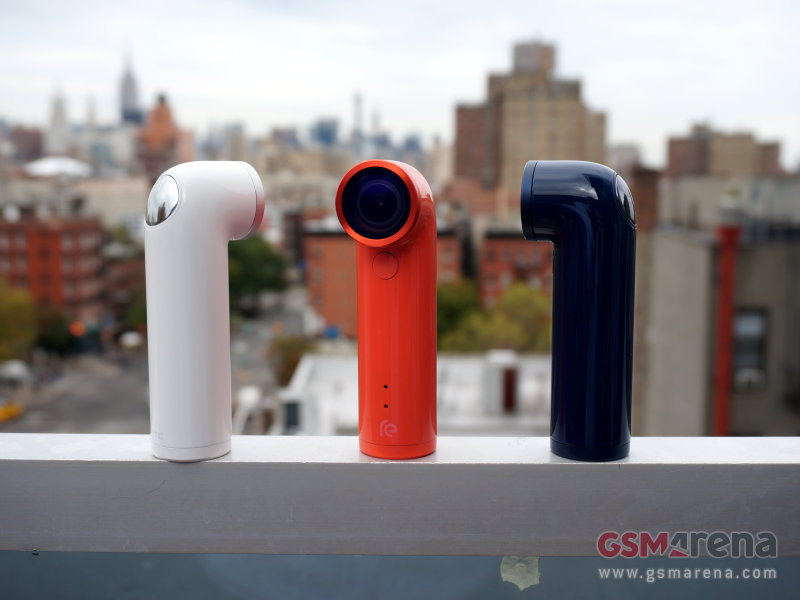
The Desire Eye wasn't the only camera on stage in New York, HHTCy is entering the action camera segment. The RE camera has a unique periscope shape and a simple interface. Gyro and grip sensors work together to automatically turn the camera on as soon as you grab it and off when you put it down. There are a total of two buttons on the camera and you can use an Android app to control it remotely.